
All articles
Myths

Lifting heavy weights doesn't make you 'bulky' overnight
Building noticeable size takes years of deliberate work, not a few heavy sets

Muscle soreness isn't proof of a good workout
Barely able to walk after the gym? That doesn't mean the session actually worked

'Spot reduction' doesn't work — here's why
A thousand crunches a day won't make belly fat disappear first

'No pain, no gain' is a harmful, inaccurate myth
Pain during a set is usually a signal to stop, not to push through

Fasted cardio: the truth about its 'fat-burning' effect
A morning workout without breakfast burns more fat mostly on paper

The 30-minute 'anabolic window' is an outdated myth
You don't have 30 minutes for a protein shake — you have a lot longer

Why stretching before a workout can actually reduce your strength
Static stretching right before a set isn't always a good idea

Squats don't wreck your knees — if you do them right
The myth about squats being 'bad for joints' has been debunked by dozens of studies

Why 'fat burner' pills almost never work
Most fat burners are just caffeine in expensive packaging

Muscle doesn't turn into fat when you stop training
And fat doesn't turn into muscle no matter how hard you train

'Upper' and 'lower' abs aren't separate muscles
It's one rectus abdominis, not two muscles you can train independently

Strength training doesn't stunt growth in kids and teens
The 'damaged growth plates' myth isn't backed by the research

Fasted training doesn't 'burn' your muscle
Your body doesn't start eating muscle tissue after a few hours without food

The 'first 20 minutes of cardio don't count' myth
The idea that your body flips a switch to fat-burning at minute 20 isn't quite right

Detox juices and teas don't 'flush out toxins' — your liver already does
The trendy word 'detox' is almost never backed by real physiology

Cardio doesn't 'eat' your muscle — unless you overdo it
The fear of cardio among people bulking is usually overblown

Running doesn't 'wreck' your knees — same myth as squats, different sport
Regular runners are, on average, less likely to develop knee arthritis than non-runners

How much you sweat isn't a measure of how effective your workout was
A workout with zero sweat can be more effective than one that soaks your shirt

'Functional training' isn't automatically better than classic lifts
Balancing on an unstable platform isn't necessarily more useful than a barbell squat

Stretching doesn't lengthen your muscle, despite what people assume
Flexibility improves for a different reason than the muscle getting longer

'Clean' and 'dirty' calories is a myth if we're only talking about weight
For weight loss, your body doesn't distinguish a calorie from broccoli from a calorie from a donut

'Muscle confusion': do you really need to constantly switch up your program
A popular marketing term doesn't quite match how progress actually works

Bodyweight training can be just as effective as a gym
Not having a barbell isn't an excuse for a lack of progress

There's no such thing as starting strength training 'too late'
Being 40, 50, or 60 isn't a reason to skip the barbell

Lactic acid doesn't cause muscle soreness the next day
One of fitness's most persistent myths mixed up cause and effect

'The best time to train' is a myth — there's no single right hour
Morning isn't automatically better than evening — your own rhythm matters more

The 'sugar crash' after dessert isn't quite what it seems
Sudden fatigue after a sweet treat isn't always about a blood sugar drop

Missing one workout doesn't wreck all your progress — the 'it's all ruined' myth
One bad week doesn't cancel out months of consistent work

The afterburn effect is real, but it won’t transform fat loss
Hard training raises calorie burn afterward, but usually by less than fitness marketing suggests.

Nasal breathing isn't a performance shortcut
Breathing through your nose can control pace, but it does not unlock extra endurance.

The “fat-burning zone” doesn’t maximize fat loss
Burning a higher percentage of fat during exercise does not guarantee greater fat loss over time.

Protein shakes don't damage healthy kidneys
High protein raises kidney workload, but workload and damage are not the same in healthy people.

Machines aren't inferior to free weights for building muscle
Muscles respond to tension, not whether the resistance comes from a barbell or a machine.
Training

Training to failure isn't always better — here's when it backfires
Grinding every set to the limit isn't a guarantee of more growth

Your warm-up isn't cutting injury risk the way you think
5 minutes on the exercise bike isn't the most useful warm-up before squats

Why 'feeling' the muscle during a set isn't just woo
Focused attention actually changes how your muscle works

Strength and muscle size don't grow the same way — or from the same thing
Three reps at max weight isn't the best way to get bigger

Why training the same way all year round isn't the best strategy
Your body adapts to a repetitive stimulus faster than you'd think
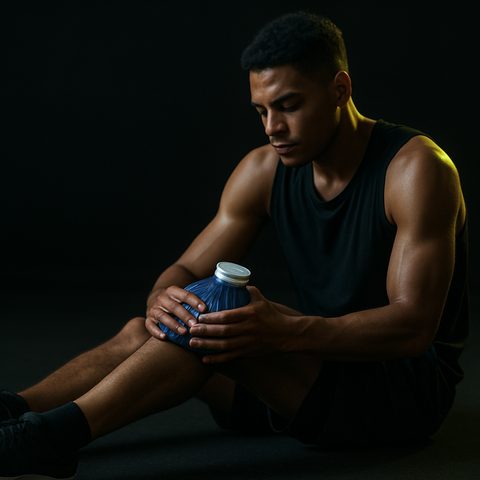
Strain or tear? How to tell normal soreness from a real injury
Not every muscle ache is cause for panic — but not every one should be pushed through either

Lower-back pain after training sometimes comes from breathing, not the weight
A bad breathing pattern in a set puts more load on your back than the weight itself

Why willpower is a bad strategy for training consistently
Relying on motivation every single day is a recipe for quitting in a couple months

Strength endurance and max strength are different training adaptations
Holding a 3-minute plank and squatting double bodyweight are different skills

One hard workout a week won't replace three moderate ones at the same volume
Training frequency affects results independently of total load

Full range of motion isn't always mandatory — when partial reps make sense
Half a rep sometimes works better than the full movement

Total weekly volume matters more than how many times a week you train
3 sessions and 5 sessions with the same total volume give similar results

Why the gym mirror lies to you about your progress
How you look today depends on more than just how much muscle you've built

Shorter rest between sets isn't always more effective
Saving time in the gym can cost you part of your strength gains

How many warm-up sets is enough — more isn't better
Over-warming up burns energy you need for your working sets

Why logging your workouts speeds up progress on its own
A simple training log works better than you'd expect

The RPE scale: gauging set intensity without a calculator
A simple 1-to-10 scale can replace complicated percentages of your max

The 8–12 rep range isn’t the only way to build muscle
Muscle can grow with light or heavy weights, but every rep range has different costs.

Blood flow restriction makes light weights effective, not effortless
Restricting venous blood flow can amplify light training, but it cannot replace every heavy set.

Why HIIT can’t replace all of your easy cardio
Intervals are efficient, but doing every cardio session hard limits recovery and aerobic volume.

Why training muscles in a stretched position can boost growth
Muscles often grow more when they work hard at longer lengths, but exercise choice still matters.

More sets aren't always more growth: the problem with junk volume
Extra sets stop helping when fatigue lowers their quality and your ability to recover.

Exercise order matters most for what you want to improve
The lifts you perform first usually receive your best effort and adapt the most.

The 8–12 rep range isn't the only way to build muscle
Muscle growth can happen across a much wider rep range than gym tradition suggests.

Drop sets save time, but they aren’t a muscle-building cheat code
Reducing the weight mid-set extends effort, but more fatigue does not guarantee more growth.

Slow reps aren't automatically better for muscle growth
Making every rep painfully slow can reduce performance without adding a growth advantage.
Nutrition
Leucine: the amino acid that actually flips the 'build muscle' switch
Not all protein sources trigger muscle repair equally — leucine content is why

How caffeine actually improves strength performance
It's not just 'feeling more awake' — caffeine has a real mechanism inside your muscles

Carbs at night don't make you fatter
Meal timing matters far less than people assume

Why protein 'burns' calories just by being digested
Different foods cost your body very different amounts of energy just to process

Keto and strength training: what actually happens to your performance
A low-carb diet affects different kinds of exercise very differently

Why calorie counting is inaccurate even if you weigh everything
A 20% margin of error is normal, not a mistake you're making

Carb loading isn't just for marathoners
Glycogen stores run out faster than you'd think

Why food variety matters more than a perfect macro split
The same 5 foods with perfect protein/fat/carb ratios isn't an optimal diet

'Just drink more water' doesn't always fix cramps
Muscle cramps aren't always about dehydration

The '3,500 calories = 1 pound of fat' rule is an outdated shortcut
The simple math of weight loss doesn't work as linearly as it sounds

Thirst shows up after dehydration has already started
Waiting until you feel thirsty isn't a reliable hydration strategy

'Fast' and 'slow' carbs are an oversimplified, inaccurate model
A food's glycemic index depends heavily on what you eat it with

Fiber helps with more than digestion — it helps control appetite too
The same number of calories with fiber can feel a lot more filling

The underrated link between vitamin D and strength/recovery
Vitamin D deficiency shows up in people who train more often than you'd think

Collagen for joints: what the research actually shows
Not every collagen supplement is equally useful for your ligaments

Magnesium is an underrated mineral for sleep and muscle recovery
Magnesium deficiency is more common among people who train than you'd expect

Creatine is sports' most-studied supplement, and still surrounded by myths
No long-term kidney harm has ever been confirmed in healthy people

Omega-3 fatty acids and recovery: what the research actually shows
Your dietary omega-3 to omega-6 balance can affect how fast you recover

Probiotics and fermented foods: an underrated tool for people who train
Gut health is directly tied to immunity and nutrient absorption

Cutting salt entirely can hurt people who train
Sodium isn't the enemy if you're sweating heavily during training

What's actually in pre-workout supplements besides caffeine
A 'pre-workout' is usually a blend of 5–8 different compounds, not just caffeine

Beta-alanine tingling isn't dangerous — here's what it actually is
That weird pins-and-needles feeling is a side effect, not a warning sign

Excess protein doesn't get stored in muscle for later — where does it go
Eating 'too much' protein in one sitting doesn't mean wasting it

When to take caffeine so it doesn't wreck your sleep
Caffeine's half-life is longer than most people assume

Why the scale jumps 1–2 kg in a day — and it isn't fat
Day-to-day weight swings almost never reflect real fat changes

Electrolyte drinks aren’t necessary for every workout
Most sessions need water, while long, hot or high-sweat training may justify sodium and carbohydrate.

Baking soda can boost intense exercise, but the dose is hard to tolerate
Baking soda can buffer intense exercise, but the useful dose is large enough to upset your gut.

Liquid calories aren’t uniquely fattening, but they are easy to overeat
Drinks obey energy balance, but they often satisfy hunger less effectively than solid food.

Beetroot can improve endurance, but it is not an instant performance boost
Dietary nitrate can make endurance exercise more efficient, but dose, timing and oral bacteria matter.

Low energy availability can harm performance without weight loss
Stable body weight does not prove you are fueling enough for training, hormones, or bone health.

Iron deficiency can hurt performance before anemia appears
Low iron stores can impair energy and endurance even when hemoglobin still looks normal.

Why strength can fall during a calorie deficit before muscle does
A weaker workout while dieting does not automatically mean you are losing muscle.

You still need protein on rest days
Muscle repair continues after training ends, so cutting protein on rest days can undermine recovery.

Plant protein can build muscle just as effectively
Plant protein works for muscle growth, but source, dose and variety matter.

Your body can absorb more than 30 grams of protein at once
Protein absorption has no strict cutoff, but muscle-building returns eventually diminish.

More dietary fat is not a testosterone shortcut
Hormones need fat, but adding butter and oil does not automatically raise testosterone.
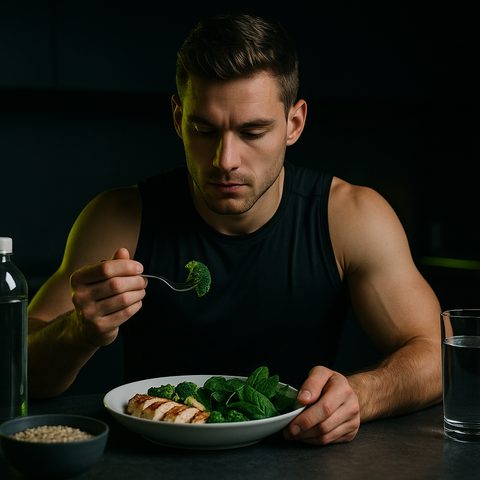
The leucine threshold isn't an on-off switch for muscle growth
Leucine helps trigger muscle protein synthesis, but crossing a magic number does not guarantee more muscle.

You don't need to combine plant proteins at every meal
Your body can combine amino acids across the day, not just from foods eaten together.
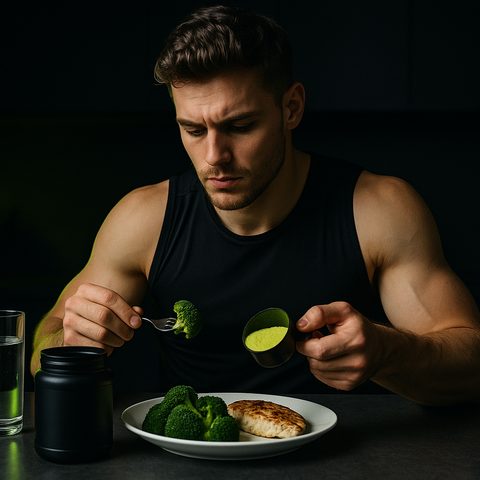
BCAAs trigger muscle-building signals but cannot finish the job
Leucine can switch on muscle protein synthesis, but three amino acids cannot build a complete muscle.
Physiology
VO2 max: the cardio metric that matters even if you only lift
This one number predicts long-term health better than almost anything else measurable

Muscle memory: why getting back in shape is easier than the first time
Even after a long break, your body remembers what it used to be

Fast and slow muscle fibers: why it changes how you should train
You literally have two different muscle types inside you, built for different jobs

Why chronic stress hurts muscle growth more than you'd think
Cortisol isn't the enemy by itself — the problem is when it stays elevated

How the menstrual cycle affects strength training
Strength and recovery shift predictably across the phases of the cycle

What 'the pump' actually does for you
That swollen-muscle feeling mid-workout isn't just cosmetic

Testosterone and training: what actually raises it, and what's a myth
Most 'natural testosterone boosters' don't do anything

A training plateau is sometimes part of the plan, not a failure
Your body needs time to 'process' the stimulus and actually grow

BMI is a poor health metric for people who train
By the BMI formula, plenty of athletes are officially 'obese'

Why beginners can grow without a clear calorie deficit or surplus
'Newbie gains' aren't a myth — they're a real window in physiology

Insulin isn't the enemy: what it actually does during training
The hormone dieters fear is actually essential for muscle growth

Holding your breath under load isn't a dangerous habit — it's working technique
The Valsalva maneuver sounds alarming, but lifters use it for good reason

Different muscles recover at different speeds
You can train your calves more often than your back, and that's not random

Two different types of muscle growth: sarcoplasmic vs. myofibrillar hypertrophy
A 'pumped up' muscle that isn't the strongest isn't a contradiction — it's physiology

NEAT: the underrated calorie burn that happens outside the gym
How much you move outside the gym can matter more than the workout itself

Not all stress hurts recovery — there's a 'good' kind and a 'bad' kind
Stress from a hard workout and stress from a work deadline act differently

Cardiovascular fitness and muscular strength-endurance aren't the same thing
Good aerobic conditioning doesn't guarantee you'll last long in a squat

Subcutaneous and visceral fat carry very different health risks
The same body-fat percentage can mean very different health risk

Aerobic and anaerobic threshold: why a casual gym-goer should care
There's a clear physiological line between an easy walk and a sprint

Overtraining and functional overreaching aren't the same thing
Not every performance dip after a hard training block is overtraining

Strength training builds stronger bones, not just muscle
Mechanical load is one of the few proven ways to increase bone density

Grip strength is a surprising marker of overall health
How hard you can squeeze is tied to a lot more than just your grip

Ligaments and tendons adapt slower than muscle — why it matters
Strength can climb faster than the tissue holding your joints together can keep up

One lifting workout probably won’t empty your glycogen stores
Hard lifting uses muscle glycogen, but exhaustion does not mean the tank is empty.

A short walk after meals can blunt the glucose spike
Contracting muscles can clear glucose with less reliance on insulin, even during an easy walk.

Why you can lower more weight than you can lift
Muscles produce unusually high force while lengthening, but exploiting it requires restraint.

Why every lift has a sticking point
The hardest part of a lift is shaped by leverage, muscle length and lost momentum.

Why weight loss slows even when your diet stays the same
A smaller body burns less energy, and dieting can quietly reduce movement and expenditure.

Why endurance training lowers your resting heart rate
A trained heart pumps more blood per beat, so it can beat fewer times at rest.

Why heart rate rises during steady cardio
A rising pulse at the same pace is usually normal cardiovascular drift, not sudden lost fitness.

Why your muscles shake during hard sets
Shaking under load usually reflects fatigue and motor control, not a muscle suddenly failing.

Training one limb can strengthen the other
Unilateral training creates neural adaptations that can preserve strength in an inactive limb.

Why your heart rate rises even when your cardio pace stays the same
A rising heart rate at a fixed pace is usually normal physiology, not sudden fitness loss.
Recovery

How alcohol actually hits muscle growth
It's not about the calories in beer — it's what happens inside your muscles

Active recovery speeds up progress more than total rest
Light movement on a rest day beats lying on the couch

Deload weeks aren't laziness — they're part of the plan
Training at your limit constantly doesn't mean progressing faster

Cold water after training doesn't always help recovery
An ice bath at the wrong time can actually blunt muscle growth
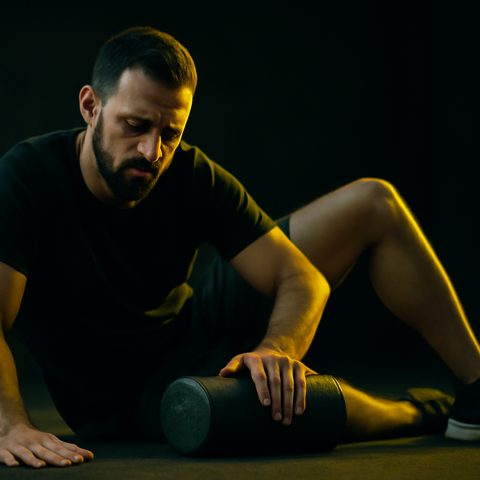
Can you train with a cold? The 'above the neck' rule
Cold symptoms split into ones that are fine to train through and ones that definitely aren't

Feeling tired doesn't always match your actual readiness to train
Sometimes your body is more ready than it feels, sometimes less

Why taking painkillers after every workout can backfire
Regular NSAID use may reduce pain while interfering with signals that help tissue adapt.

Massage guns don't break up knots or scar tissue
Percussive massage can reduce soreness and improve mobility, but it is not remodeling tissue.
Sleep

Why an extra hour of sleep beats an extra hour at the gym
Poor sleep undoes even the most carefully planned training program

Why appetite is impossible to control after a bad night's sleep
It's not weak willpower — it's ghrelin and leptin thrown out of balance

Not all sleep is equally useful for recovery
Deep sleep and REM sleep do completely different jobs

Sleeping in on weekends doesn't make up for a short week of sleep
'Sleep debt' builds up faster than you can pay it back

Sleep timing matters, not just total hours
Eight hours on an irregular schedule may not restore you like consistent sleep does.

A nap can improve performance, but it cannot replace nighttime sleep
Nap length and timing determine whether you wake sharper, groggy, or unable to sleep later.
No articles match your search.